
4th CALLERLAB Convention 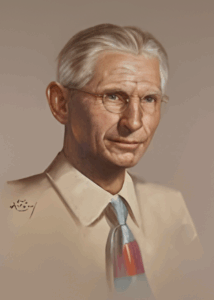
Milestone Award
If ever there were a prototype of the traditional cowboy figure who rode miles at attend a square dance, then returned home in the early morning hours—sleeping in the saddle so he could be ready for the next day’s work—that person could well be Jimmy Clossin.
Like many of the old-timers, Jimmy was never taught to square dance or call, he just took to it as naturally as walking or eating. Looking back to the early 1900’s he recalls doing the dancing and calling as a boy. According to Clossin, “Everybody square danced from about six years of age to grandparents. We think we have a lot of square dancing today (in the 1950’s), but I’ll venture to say that a far larger percentage was square dancing then, than now, if you counted up.”
As a young man, Jimmy rode the range along the New Mexico-Texas border and up in the Panhandle country putting famous brands on many a maverick. When he has the opportunity he traveled around the western sections of the United States looking for square dances wherever he could find them and constantly adding to his knowledge of the activity. “There were not so many patterns as now so it was no job at all to be able to call them all. New material was brought to up by cowboys riding the trail herds from other sections of the West. We were on the route of the big hers trailing from New Mexico to West Texas into Dodge City, Kansas, so we were exposed to types of dancing from sections West and South of us. At that time we probably knew forty or fifty dance routines. Some of them were of the two couple patterns, the progressive pick-up type, tow couple lead, and quadrille type in which all four couples were in action.”
After serving in France in World War II, Jimmy returned to his range activities and began devoting more and more time to square dancing. Finally in 1935 he became a full-time caller an teacher and traveled from San Diego to the Eastern states where he helped develop the western style of square dancing, teaching classes, serving on institute staffs, and encouraging new callers. In 1948 Clossin co-authored West Texas Cowboy Square Dances, “a collection of Hoe-downs, Quadrilles, and Chatter” gathered during his travels. The book has proven extremely valuable as text and research manual for callers across the country,