
10th CALLERLAB Convention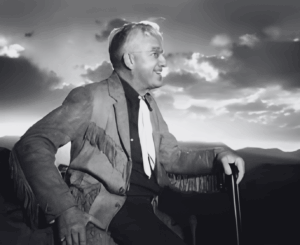
Milestone Award
Circumstances play odd tricks on men’s lives and it now a part of Lloyd Shaw’s original dream to change the dancing habits of a nation, In the 1920’s, when he was excitedly unearthing the lost and lovely Western American Folk Dance, his horizon was Cheyenne Mountain School in Colorado Springs, Colorado. His immediate concern was the building of a recreation program that would include boys and girls in a joyous outpouring of energy and spirit, a program that would have meaning to the group and to the individual.
He was sure that the ancient Greeks were correct in believing that dancing was an absolutely essential part of a sound education. But the kind of dancing he himself had done in school and college had left him cold. What, then? Howe were children, awkward physically and socially, to find themselves in the dance? A fortunate circumstance brought Elizbeth Burchenal to town. With the impetus of her books and her personality, it was simple for Shaw to carry on.
In Miss Burchenal’s repertory were a few old New England quadrilles, and several typical contras. But Lloyd knew that were was a western dance, a dance that was out very own, and he dug for it furiously. There a few “callers” in the area, but they could not write down a call; they had to have music, and dancers on the floor, before they could remember it. He would have to dance to find it.
In Colorado Springs at the time, was group known as the “Friendly Club” who met regularly at eh IOOF Hall to square dance. Lloyd and his wife, Dorothy, danced with the “Friendly Club” and Friendly became the first word in Lloyd Shaw’s dance vocabulary. Dancing must be friendly; it must be joyous; it must be beautiful.
Lloyd fell head over heals in love with the American square dance. It was vigorous, beautiful in pattern, varied in step -and so friendly. Some square dance “call” books were available, all were printed in the east and were of the stately quadrilles. Callers in the west, it appeared, had never written down their calls. And so, the search for the dance descriptions went on.
Once the ice was broken, help came for all quarters. Dance began to unfold-dozens, tens of dozens of them. They were included in the Cheyenne programs. By this time, the Cheyenne Mountain Dancers were in demand for programs in schools and colleges all over the state.
As Lloyd Shaw appeared with his dancers in various areas, requests began to come in for his material and, as a result, in 1939 his “Cowboy Dances” was published. This was a carful, thoughtful, and lively discussion of American square dancing as danced in the west with almost a hundred of these lovely old patters minutely described and pictured.
In the spring of 1939, the first cross-country trip for the Cheyenne Mountain dancers materializes. Traveling on a shoestring, in a small bus, they made a joyous, uncomfortable, and triumphant pilgrimage that included Washington DC, Philadelphia, and New York. In Chicago, they danced at a national meeting of the American Association of Health, Physical Education, and Recreation. Later many teachers came to Shaw and said “Will you have a summer class in the kind of dancing in Colorado Springs? We’ll all come.”
In the summer of 1940, the first of Shaw’s famous master was held at Cheyanne Mountain School, with forty-one teachers and recreation directors in attendance. Soon these classes grew from one to three each summer with 300-500 leaders in attendance. There were few names among the early leaders in the square dance movement that did not appear at one time or another on the roll of those classes. Many came back year after year, and a core of sound, idealistic leadership was built.
Those leaders who were privileged to be admitted into the classes took back with them to their own communities, not only the dance of America, but a philosophy about square dancing and a dedication that was all important. These leaders in turn taught hundreds of dancers and brought into the picture more callers who, in their turn, instructed more and more beginners. In time, many of these same leaders also conducted callers and teachers’ courses to help instruct additional leadership.
A feature article in a pre-WWII issue of Saturday Evening Post, and a role in Selznick’s “Duel in the Sun” shortly after the war, brought Lloyd Shaw and the western form of square dancing more and more into the public eye. An album of his calls on the Decca label, and later squares and round dances on the Lloyd Shaw label, contributed much to the activity.
Somewhere, over the years, as a mark of endearment, Shaw became known as “Pappy” both to his youngsters in the Cheyenne Mountain School and to square dancers and square dance callers in all parts of the world. Just as he was first to be named to the Square Dance Hall of Fame, he was the first to receive CALLERLAB’s Milestone Award.
Over the years, “Pappy” and Dorothy were guest of honor at countless festivals and conventions and July 13. 1950, Lloyd served as co-master of ceremonies for the then, largest square dance ever held, the Diamond Jubilee, in Santa Monica, California. 15,200 dancers filled the area. 35,000 spectators watched on the side lines.
Lloyd Shaw passed away July 18, 1958. He left behind him a rich heritage an appreciation of the American Dance known to us all as “friendly.”
Lowell Thomas, famed radio commentator, said of Lloyd Shaw, “he was a man of imagination and magnetic personality who inspired everyone with whom he came in contact with.”