
31st CALLERLAB Convention 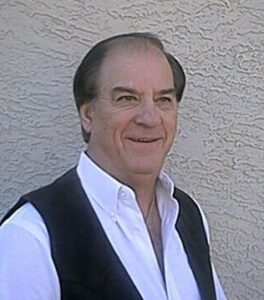
Milestone Award
Presented by Mike Seastrom
The CALLERLAB Milestone is a most prestigious award. Each nominee is judged using rigid criteria in five separate categories. The primary purpose of this award is to recognize those individuals, whether CALLERLAB members or not, who have made outstanding and significant contributions to square dancing.
Most of us in square dancing, and in life, see only things from our own perspective. In only seeing things from one angle, we often miss those things that encompass the
“BIG” picture. Tonight I would like to explain more of that entire picture, especially for those that were not square dancing prior to 1975. I know that, as this presentation unfolds, most of you will know of the identity of tonight’s recipient. I only ask that you keep the secret with me until his name is announced.
CALLERLAB’s 2004 Milestone Recipient was born in 1938 in Atlanta, Georgia. After his schooling in Atlanta, he was accepted into the United Sates Naval Academy, and while at the Academy, he became the lead singer for a rock band. At the same time, while on leave from Annapolis, he started his calling training with his dad, known to most as Doc. He learned several signing calls and while on stage, he would “jazz up” or “modernize” these songs the way a teenager or lead signer in a bluesy rock band would do them.
His dad would tell him, “If you want to call, you have to be able to call hash. Calling patter is what truly makes a square dance caller.”
After graduating from Annapolis, and serving several years in the Navy and special service, he married Gloria Mason. They started a family, and in the late 1960’s moved back to Atlanta and began square dancing again. He asked his Dad if he would teach him to really be a caller and he agreed. His dad was a perfectionist, and
they began what became a two-year program. It was rigorous, but our recipient hung in there and finally accepted a booking more than 100 miles away, so as not to
embarrass his Dad if things didn’t go right.
While enjoying calling as a hobby, he and his family moved several times due to career promotions and finally ended up in Houston. By this time, they had 3
children. He was calling for local clubs and traveling on the weekends while working for a large company that catered to the oil industry. He was offered a Vice President position with the company, but was told he would have to
give up square dance calling because it didn’t fit their ‘corporate image.’ Instead of taking the position, he gave notice and began calling full-time.
In 1974, he formed his own record company and that is where his impact on square dancing and square dance music surpasses anyone before or anyone since. You see,
before 1974, we had good music, but it was arranged very much the same. All of the record companies at the time still had their own unique sound, but the instruments
just played, or more or less jammed, never taking into account when the caller was actually calling. Consequently, most of that music had “holes” in it and would largely “die out” or sound weak at the end of the called phrase. Many of the singing calls lacked a melody line for the callers to sing as they called.
Our recipient wanted to bring the concepts of modern recorded music to square dancing. He still laid a basic rhythm track, but then arranged the other instruments so that one instrument would shine or play the melody line during each figure. This in itself was somewhat revolutionary, but he wanted to go further. He was the first producer to make dramatic use of “chases” and “fills’. Suddenly these “holes” or places where the music would previously die out disappeared. Now when the caller finished calling, the music would swell for the dancers. Each sequence featured a different lead instrument playing the melody and now there was a second, and sometimes a third instrument filling the gaps. This was a sound rarely heard in square dance music before.
He featured instruments very seldom used in our music such as steel guitars, harmonicas, mandolins, dobros, and even used drums as lead instruments to excite the dancers. His philosophy is that “an instrument is sweeter to the dancer’s ear, than the sound of a caller’s voice and the music should stand out there for the
dancer.” He calls these extra chases and fills “candy” for the dancer’s ears and feet.
Our recipient’s music philosophy was one of the contributing factors in the change of our calling that occurred from the 1960’s to the 1980’s. Callers no longer needed
to put a word to each beat, to fill the holes in the music, and help the dancers keep time with their feet. When using a good piece of music, our recipient encouraged
callers to “prompt” more and let the music play so the dancers could dance with just the sound of their feet and the music.
One needs to only listen to almost any of today’s square dance music to hear our recipient’s influence. Almost every label applies his method of arrangement and engineering. When a couple of today’s most successful labels began, its producers took a copy of our recipient’s music to show the band and engineer what they wanted their music to sound like.
Our recipient was also a fixture at CALLERLAB music sessions. He would preach his philosophy, and then show exactly how he planned, arranged, and engineered
his music. When asked why he was “giving away his trade secrets”, he would say, “If it makes square dance music better and dancing more enjoyable to the dancers,
it’s more than worth it.” He taught many record producers exactly how to improve their music.
He also taught callers to just listen to the music in a song the first time they played it, instead of trying to call it right away. In doing so, they could find the special instrumentation or “candy for the dancers” to bring out while doing the number, instead of just calling over it.
Early on he discovered that many of the square dance records of the day were prone to skipping. He was one of the first to employ what is known as “triple dipping”. This is a process where records are dipped into vinyl three times. This makes the record thicker and allows deeper grooves to be cut, making them much less likely to skip. This process is quite a bit more expensive than the conventional way of single dipping, and he could have easily charged more for his recordings, but he kept his records at the same price as all of the other labels. Our recipient joined CALLERLAB in 1976 and has served on the Board of Governors and the Executive
Committee. He has presented countless caller and dancer seminars all over the world and has organized and been on staff at many caller schools over the years.
In 1989, he married Carla and helped raise her two children. Today they enjoy two grandsons and are expecting a third grandchild in the fall.
He is passionate about his family, square dancing and his music. He is a caller/leader in every sense of the word. He is always a gentleman on stage and treats other callers how he wants to be treated. He has always respected callers and dancers and carries himself the same way he did when he graduated from the U.S.
Naval Academy. He has been calling for 47 years and never misses an opportunity to help other callers who seek his advice. Gail’s contribution to this presentation
goes like this:
Lawdy, Lawdy, Miss Clawdy! I am really pleased to Stand Up here and make this presentation. It’s the Next Best Feeling to Taking It Easy. If They Could See Me Now, they would know I was here to talk about someone who is an Expert At Everything. It’s Alright With Me, but it is Hard To Be Humble when you’re such a Good Luck Charm.
Lots of things have been said about this person. Oh, you know, things like he’s One In A Million and he’s Just a Redneck In a Rock and Roll Bar on a Natural
High in the company of a Good Hearted Women, listening to the Rhythm of the Rain who’s Ready For The Times To Get Better. Lot’s of people have Memories, Golden Memories. Who Am I To Say be quite when they go on and on – you know, Yakety-Yak. I Don’t Believe My Heart Could Stand Another
You but Here I Am In Dallas (I mean Reno) presenting this award to someone who probably needs to be in Amarillo By Morning. I hope he doesn’t forget his
Two Pairs of Levis.
I’m going to jump off the Sin Wagon right now. So, before I Sail Away to Margaritaville, I want you to know I Had a Lovely Time talking about a man who is Hooked on Elvis and Old Time Rock and Roll.
His broad influence on our activity has stood the test of time. He has unselfishly worked in un-chartered fields, displaying true leadership and professionalism.
It is with the utmost respect for his energy, his passion, and his talent that I present the 2004 CALLERLAB Milestone Award to Wade Driver.